Belts built to outlast the wearer.
Most belts sold today are bonded leather — ground-up scrap, glued and pressed into a strip.
They crack inside a year, and the only honest thing to do with one is throw it away. A belt cut from a single piece of full-grain hide does the opposite: it takes the shape of the person wearing it and gets better looking the longer it is worn. That is the entire argument for making them by hand, and it is the only kind we make.
What happens to a hide
Six operations, none of which a machine does well. This is where the cost goes, and it is the difference you feel in the first week.
- Cut
- Straps are pulled from along the backbone, where the fiber is tightest and the stretch is least. A whole hide gives up only a few belts worth keeping.
- Bevel
- The square corners are pared off both edges by hand so the belt rolls against your hip instead of digging into it.
- Burnish
- Edges are wetted, waxed, and rubbed until the loose fibers lie down and seal. This single step is why a cheap belt furs up at the edges and this one stays closed.
- Punch
- Holes are cut, not drilled, with a sharpened punch — a clean wall that will not tear into a slot the way a stamped hole does.
- Stitch
- Two needles, one thread, pulled in opposite directions through every hole. A saddle stitch that loses a stitch stays shut; a machine lockstitch unzips.
- Finish
- Oiled rather than painted, so the leather keeps breathing. It darkens where you bend it and where the sun reaches it, and that record is the point.
The tree
There is one tree in the field. No windbreak, no shelter, no company, and it has stood there longer than anyone still working this ground.
In a whiteout you lose the fence line and you lose the road. You can always find the tree.
We named the shop after it because that is the standard: build the thing that is still standing after the weather has had its turn.

Two people and a bench
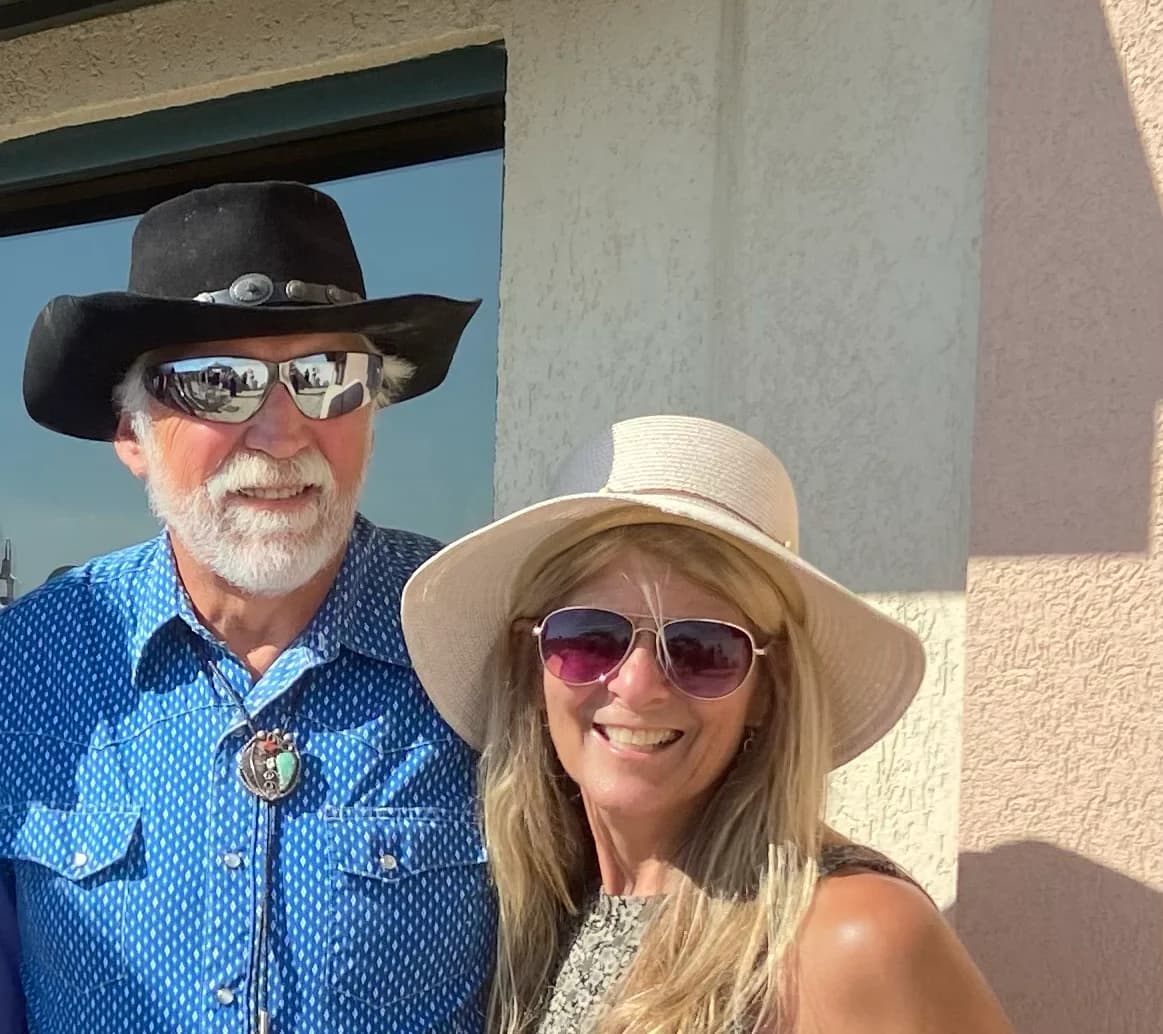
No production line, no contractors, no overseas finishing. Every belt is cut, edged, and stitched by the same two pairs of hands, which is also why there are never very many ready at once.
Your belt size is not your pant size
Nearly everyone orders a belt two inches too short. Your waist measurement is taken against your skin; a belt goes around your trousers, your shirt tail, and whatever is in your pockets.
Take a belt you already wear and lay it flat. Measure from the fold at the buckle to the hole you actually use. That number is your size — not the number printed on the strap, and not the number on your jeans.
Get it wrong and it is not a problem. Every belt is cut to order, so we cut yours to the number you give us.
The shop opens soon
One email when the first belts are ready. Nothing else, and nothing sold on.